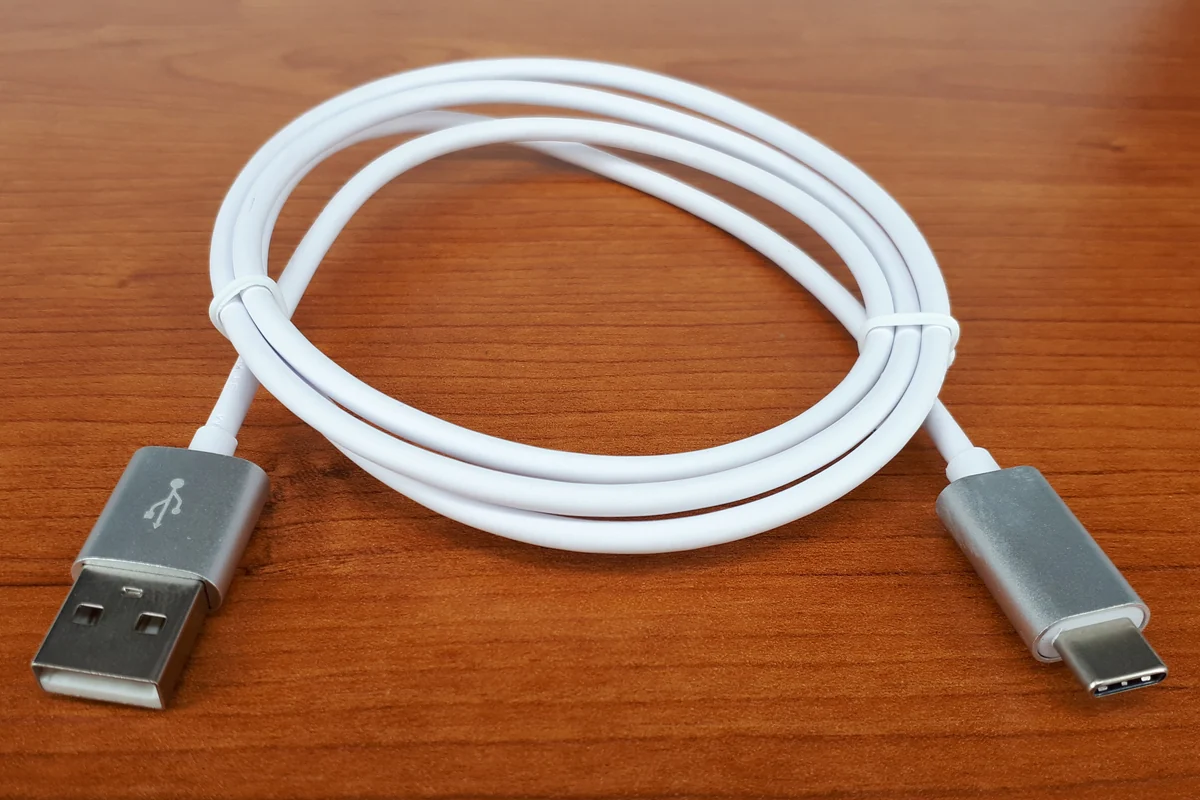
USB-C describes a connector you can recognize, but a familiar shape does not establish everything a cable can do. The cable used to charge a phone may be a poor choice for an external drive or a monitor. A working charging connection does not prove that the same setup supports video.
The useful change in shopping habits is to write down the job first. Look for charging power, data speed, and display compatibility as separate items. This is an explainer based on standards and manufacturer documentation, not a laboratory test of cables.
Read watts separately from data speed
The USB Implementers Forum's cable guidance explains that cables have different capabilities. Its USB-C-to-USB-C certification program uses 60W or 240W power markings. Except for USB 2.0 High-Speed cables, the program also requires supported data-rate markings.
That makes watts a useful answer to a power question. It does not answer the data question. A large wattage printed on a listing is not a promise of fast storage transfers. Conversely, a high data-rate claim needs a separate check of charging capability.
For a desk setup, write two lines: the power your laptop needs under its manufacturer's guidance and the data standard your peripheral supports. If you also need a display, add a third line. A product that only answers the first line leaves the rest of the purchase unresolved.
Understand the ceiling, not just the headline
The USB-IF's Power Delivery overview describes the 2021 USB PD 3.1 update enabling power delivery up to 240W. That is a standards capability, not a claim that every USB-C device, charger, or cable delivers that amount.
Think of the setup as several connected choices. The device, charger's supported output, cable, and any intervening dock must suit the task. Buying a cable with a larger power rating does not upgrade a device's charging requirements or turn an unsuitable charger into a different one.
Our buying rule is to match the documented requirement before paying for extra capability. A phone-only charging cable and a cable for a laptop dock may deserve different specifications. Keeping those roles distinct can be less confusing than buying every cable as though it must do every job.
Check the exact cable model
Apple provides a concrete illustration in its Thunderbolt 3 cable documentation. The described 0.8-meter cable supports Thunderbolt 3 transfers up to 40Gbps and up to 100W power. Apple contrasts it with its described 2-meter USB-C Charge Cable, which transfers data at up to 480Mbps and does not support video.
Those specifications belong to the named products. They do not describe all cables with either connector, or every later Apple cable. Check the exact model, length, and revision in a seller's listing against the manufacturer's page. A family name or photograph alone is not enough.
For an external drive, read the drive's interface specification and your computer port's specification alongside the cable's. The highest number on one item cannot establish the performance of the entire connection. Do not replace a drive just because a familiar-looking cable makes it feel slow.
Troubleshoot one link at a time
If charging works but a monitor does not, start with the computer's port documentation, the display's input requirements, and the cable's video support. Include adapters and docks in that list. A charging icon provides evidence about power, not a diagnosis of the display path.
Try a known working compatible cable and connection when available. Change one part at a time and record the result. Swapping the cable, dock, and port simultaneously may restore the connection without telling you which component mattered.
For multiport chargers, read the manufacturer's output table for the combination of ports you plan to use. Compare that configuration with the single-port rating rather than assuming the advertised maximum applies independently to every connected device.
Make the next purchase easier to identify
Keep the packaging or order details that state the cable's specifications. Mark cables by their intended job without covering connectors or damaging the jacket. A label such as laptop charging or monitor connection can be more useful at the desk than remembering the price.
Our checklist has five fields: connector at each end, supported power, supported data rate, any required display or Thunderbolt compatibility, and length. Match them with the manufacturer documentation and certification information where provided. Stop short of assuming that an unverified logo or ambitious marketplace title proves a claim.
The practical goal is a dependable connection for a named task. Higher specifications can be worthwhile when you need them, but a connector shape is not a substitute for reading the specifications.